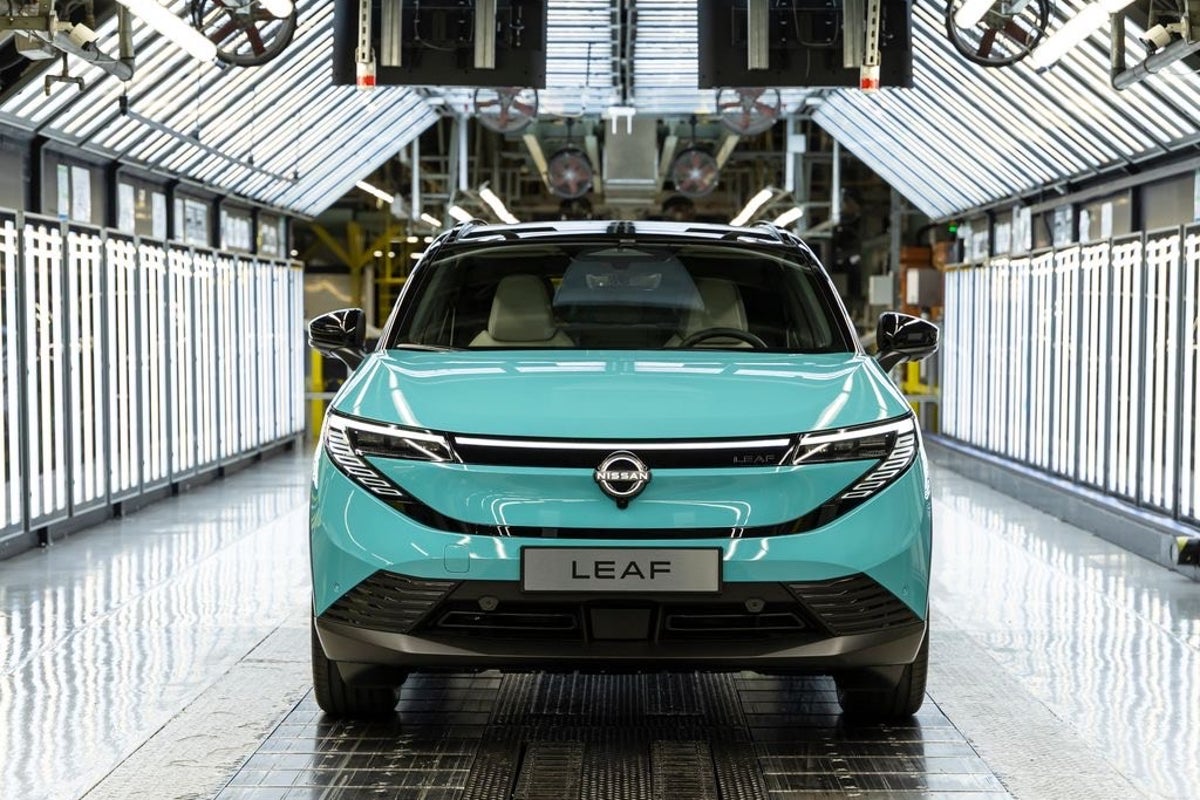
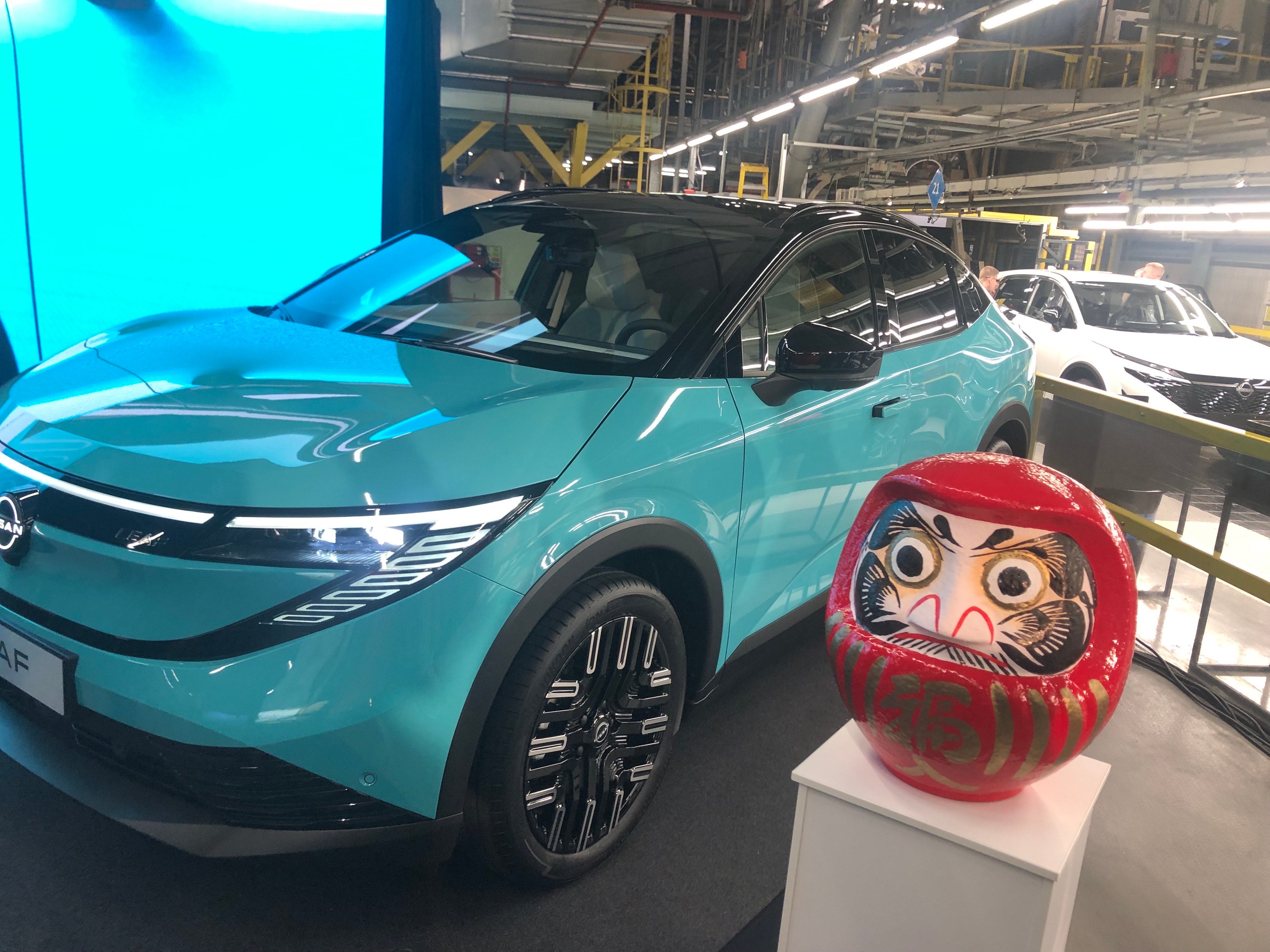
To the futuristic strains of The Human League’s “Electric Dreams”, the first of a new generation of Nissan electric cars is revealed to the world’s media on Line 2 of the company’s huge Sunderland plant.
A teal blue third-generation Nissan Leaf is to be built in significant numbers for British and European markets, with the only other production centre being at Tochigi, Japan which supply Asian, American and other markets.
A new electric battery plant will be running alongside, operated by AESC., a subsidiary of Chinese giant Envision. It is the largest such “gigafactory” in the UK. Taken together they represent one of the biggest investments in British manufacturing in recent years. UK sales of the strikingly styled model will begin in late 2026.
Further new Nissan electric products will follow, including an all-new Juke, also to be built in Sunderland. Although much of the engineering for the new Leaf took place in Japan, it should help protect the 6,000 jobs in the UK factory, plus many more in the UK supply chain.
Indeed, according to Shunsuke Shigemoto, Nissan’s Vice President for Powertrains and Advanced Engineering, the workforce at Sunderland Is “key” to their decision to transition the factory and associated battery plant into an EV hub – praising its efficiency and flexibility to produce various electric, hybrid and petrol variants according to consumer demand.
Mr Shigemoto suggests the new model will help raise production in Sunderland back up to near its capacity of half a million vehicles per annum.
However, the political uncertainty has left a bit of a cloud over the start of production ceremonials in the North East. In the past few days the Conservative leader, Kemi Badenoch, has said that she would scrap the zero emission mandate and the plan to end sales of new petrol cars by 2030 and hybrids by 2035.
An even greater degree of scepticism about electric cars is on display at Reform UK, and there are heavy hints emerging from the EU that it too may well push the zero emission target down to 90 per cent of new cars to be green – and postpone the deadline to 2040.
Although the Sunderland operation is agile enough to cope with such disruption, it would certainly make the half a billion pounds spent on an electric future look unfortunate.
Friederike Kienz, vice president for sustainability said of rumours about a future UK government scrapping the EV target: “Regulation is only one element in uptake and transformation…will it lower the pace? Yes. Policy is a factor, and seen very, very clearly in Norway” (where heavy invectives have succeeded in mass EV conversion).
She stressed that it was most important that an electric future remains the “endgame” even if the pace of change varies. In Sunderland, they are hoping the electric dream really does come true.