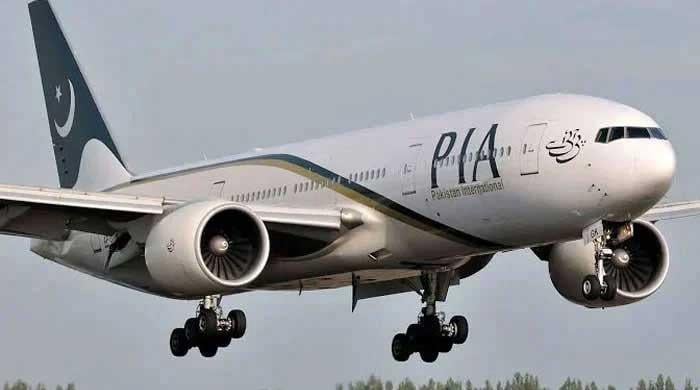
Pakistan International Airlines has long been more than an airline. It has been a floating metaphor for the Pakistani state itself born as a symbol of national ambition and technical prowess which gradually turned into a fiscal albatross, circling the public balance sheet year after year, consuming subsidies, eroding credibility and defying reform.
That is why the recent auction awarding a 75% stake in Pakistan International Airlines to a Pakistani consortium led by Arif Habib for roughly Rs135 billion feels momentous. Not because a sale has finally happened, but because it forces a harder question. Is this the end of a long failure, or merely the beginning of a more subtle one.
The transaction, concluded after years of aborted attempts, comes amid IMF-backed stabilisation efforts and shortly after PIA’s resumption of European and UK routes. These developments have been celebrated as signs of renewal. Yet privatisation, like accounting, is unforgiving. It rewards precision and punishes narrative excess.
To judge this deal, we must look past the headlines and examine what has actually changed, what has not, and what must now follow if this is to become a genuine turnaround and not a cosmetic milestone.
At the heart of the deal lies a simple but uncomfortable arithmetic. The government has sold 75% of PIA’s operating airline for a reportedly Rs135 billion enterprise value. Of this, only a small portion is cash flowing directly to the state. The bulk is structured as fresh capital injected into the airline to stabilise operations, fund fleet requirements and restart growth. The state also retains a 25% equity stake, implicitly valued at around Rs45 billion.
Set against this is the far larger reality that most of PIA’s historic liabilities, roughly Rs650 billion, have been parked in a separate holding company and remain with the government. When one nets the immediate fiscal value received, cash plus retained equity, against these legacy obligations, the state is still left carrying a burden in excess of Rs600 billion.
This distinction matters because it exposes the fallacy of celebrating privatisation as fiscal salvation. The sale improves incentives at the operating level, but it does not erase the cost of decades of misgovernance. Several economists have rightly noted this as a necessary structuring choice to make the airline investable, not a magic wand for the public balance sheet.
PIA’s decline is neither sudden nor mysterious. In the 1960s and 1970s, it was a regional leader, advising and even helping establish airlines across Asia and the Middle East. Over time, political interference replaced commercial logic.
Overstaffing ballooned costs, procurement became opaque, and routes were chosen for patronage rather than profitability, while management turnover eroded accountability. Repeated restructuring plans promised revival but delivered little beyond temporary cash injections.
The result was an airline that could not compete on cost, reliability or service quality, even as regional peers professionalised and globalised. Losses became structural, not cyclical. Subsidies became habitual, not exceptional. By the time safety concerns forced suspensions of international routes, PIA had already become a case study in how state ownership, without institutional discipline, corrodes operational capacity.
The current privatisation follows a familiar template. Good assets and operations are carved into an OpCo, leaving bad debts and liabilities in a HoldCo. This approach is defensible and rather unavoidable, as no investor would assume decades of accumulated liabilities. Yet the success of such structures depends on what follows.
First, the process has raised questions about the transparency and depth of strategic participation. The absence of tier-one global airline operators in the bidding process suggests that the opportunity may have been framed more as a financial rescue than an aviation strategy.
Second, generous tax concessions and liability shielding reduce downside for new owners but shift risk decisively onto taxpayers. Without rigorous performance covenants, this can entrench moral hazard rather than eliminate it.
International precedents are instructive. Argentina’s airline privatisations oscillated between private control and renationalisation due to weak regulation and politicised oversight. Egypt’s reforms stalled when ownership changes were not accompanied by governance reforms. These examples show that privatisation without institutional redesign often recycles failure under a different label.
If Pakistan wants this privatisation to mark a break from the past, it must think beyond the binary of state versus private ownership. The question is not who owns PIA, but how capital, labour and governance are deployed.
One approach is to embed performance-linked, phased equity buy-backs. Institutional investors could be offered the option to acquire additional stakes at predefined operational milestones such as load factors, on-time performance and unit cost reductions. This aligns capital deepening with execution rather than optimism.
Second, as it stands, PIA needs strategic airline partners, not just financial sponsors. Code-sharing, fleet pooling, and joint procurement with tier-one global carriers can unlock network synergies that balance-sheet repair alone cannot deliver. Aviation is a scale business. Insularity is expensive. Perhaps an avenue for the government to discuss with the UAE, whose airline industry was once stood up by Pakistan.
Third, labour reform must be intelligent, not blunt. Across-the-board layoffs would destroy morale and invite political backlash. A better model is skill-based redeployment tied to airline-wide productivity metrics, supported by retraining funds financed through future profit-sharing instruments. Workers then become stakeholders in recovery, not casualties of it.
Fourth, PIA should be repositioned within a regional aviation hub strategy. Pakistan’s geography is an asset, not a footnote. Properly leveraged, PIA can serve trade corridors, tourism flows and a vast diaspora market across Europe, the Gulf and East Asia. Connectivity is economic infrastructure. Treated strategically, it multiplies value beyond the airline itself.
Finally, governance must be modern and public. Independent boards with proven experience in airline turnarounds should be mandatory. Quarterly performance scorecards should be published, benchmarking PIA against regional peers in terms of costs, punctuality and service quality. Sunlight is not punitive. It is preventive.
The IMF’s involvement ensures short-term discipline, but it cannot manufacture institutional capability. That must be built domestically. As reported by financial news outlets, markets are watching not only the sale price but also the depth of the reform that follows.
The privatisation of PIA is not a verdict. It is a test. It asks whether Pakistan can convert ownership change into institutional change, whether it can deploy capital toward productivity rather than patronage, and whether it can finally treat its national airline as an economic instrument rather than a political ornament.
If this moment is handled with seriousness and imagination, PIA can once again become a connector of people, markets and ideas. If not, it will simply fly under a different flag, carrying the same old weight. The difference will not be measured in press releases, but in balance sheets, flight schedules and, ultimately, public trust.
The writer is a chartered accountant based in the UK. He can be reached at: [email protected]
Disclaimer: The viewpoints expressed in this piece are the writer’s own and don’t necessarily reflect Geo.tv’s editorial policy.
Originally published in The News